Showing posts with label Liability insurance. Show all posts

Saturday, 9 February 2013

CINMAYA MUDRA


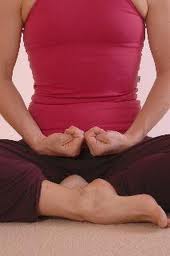
cinmayamudra is sit comfortable sitting position, with the needle upright. Place . Fingers and thumbs together and extend the other 3 fingers out. Turn the palms.Upwards, and rest the backs of the hands onto the knees or thighs. In yoga cinmaya mudras Close the eyes and breathe naturally, through the nose. Try to maintain consciousness of each. Breath moving into and out of the nostrils for two or three minutes.
   Yoga mudras, or hand gestures, are specific postures for the hands performed during yoga or meditation. Mudras can aide the body in healing by channeling energy to specific areas or parts of the body, and energizing the mind or body connection. The benefits of yoga mudras can be seen when used on a regular basis. It is often helpful to perform mudras during pranayama. Pranayama, meaning “expansion of life force, refers to yogic breathing. Pranayama might be described as deliberate and deep breathing with the goal of using the breath to bring new energy into the body to stimulate physical and mental well-being. When used in conjunction, pranayama and mudra can have powerful effects on the body and mind.
Sit or lie in a comfortable position when practicing pranayama. Mudras should be held in relaxed positions, without strain or discomfort. The Vishnu Mudra can be used to alternate breaths through each nostril. Use the right hand o perform Vishnu. Place the tips of the forefinger and middle finger at the base of the thumb while leaving the last two fingers upright. Use the thumb to close one nostril, breath deeply filling up the belly and chest, then release the breath and use the ring finger to close the opposite nostril. Continue alternating breaths.
Practice Chin Mudra to ground the mind. Place hands on the knees or thighs, palms down. Place the tip of the forefinger and the tip of the thumb together, letting the other three fingers relax. The Jnana Mudra is very similar to Chin. The fingers are placed in the same position, but the hands should rest facing up, as opposed to down. Gnana can uplift the mind, giving a sense of spaciousness.


Friday, 8 February 2013

YOGA MUDRA


The meaning of ‘mudra’, which is a Sanskrit word, is ‘closure’ or ‘seal’. Mudra hand positions are physical gestures that have an effect on the energy flow of the body. The ancient practice of yoga links the hand mudras to the changing spiritual and mental aspects of a person. The mudra are usually finger positions like in the Anjali Mudra, where the hands are kept at the center of the heart.The word “Yogamudra” is derived from the two words – yoga (awareness) and mudra (seal). Yogamudra thus is the “seal of awareness”. It ensures that you attain the highest stage of awareness.

How to Perform:-

From a position sitting on your heels, press your sitting bones downward.
Press the crown of your head away from your shoulders and feel the elongation of your spine.
Bring your hands behind your back, interlacing your fingers and, if possible, drawing the heels of your palms together. 
Press your hands away from your shoulders, allowing your arms to elongate, your shoulder blades to come together, and your chest to expand.
Lift your tailbone and allow the lifting to extend your torso forward over your knees, bringing your forehead to rest on the ground.
Allow your arms to come over your head, pressing your little fingers toward the floor in front of you.

Benefits of this Mudra:-
It strengthens the internal organs of the abdominal region.
It relieves constipation and indigestion.
It stimulates the ovaries and the uterus in women.
It rectifies the problem of premature ejaculation.
It increases the memory power.
It removes excess of fat in the abdominal region.
It awakens the ‘Kundalini Shakti’ (Serpent power). The person becomes one with the cosmic consciousness.

Beware:-
Diabetic patients should not perform this asana.
People with serious eye, heart or back conditions should avoid doing this asana.


Wednesday, 6 February 2013

SAVASANA


This is an asana for relaxation of all muscles, nerves etc. It should be performed at the very end of your asana practice. This is an asana for relaxation of all muscles, nerves etc. It should be performed at the very end of your asana practice. (Mritasana is another name for this pose.)

Technique:- Spread a soft blanket. Lie flat on your back. Keep the hands on the ground by the sides of your body. Stretch the legs quite straight. Let the feet drop outwards. Close the eyes and breathe slowly. Relax all the muscles, nerves, organs, etc. Start the relaxation process from the toes. Then proceed to the calf-muscles, muscles of the back, chest, arm, forearm and hands, neck, face etc. See that the abdominal organs, heart, chest and brain are also relaxed. Relax the plexus of nerves also. Now repeat OM, OM, and OM. Think of Atman. Meditate gently with a feeling of purity. Do not sleep. Continue the meditation for 15 minutes. You will enjoy perfect peace, ease, comfort and relaxation. Every one of you should enjoy it. Words are imperfect; they cannot adequately describe the feeling.

Benefits of Savasana:- 
It is not just a nap with a fancy name, there is no sleeping in savasana (though many people do fall asleep, and that’s fine if your body is telling you that’s what it needs.) After a practice of yoga, our bodies need to relax. This pose helps us to physiologically relax each muscle, thus helping us to mentally and physically digest our practice.
It also helps to relieve stress, bring ourselves away from our day and onto our mat.
Now, everyone who has ever been in a yoga class lying in savasana listening to the teacher telling us to “remove yourself from your day” has immediately planned what they’re having for lunch, tomorrow’s to-do list and worked out how much change is in their purse.
If this happens, which is inevitable, don’t panic.
This is how our minds work, and that’s okay. In order to consolidate our practice and have a hard-earned rest, we don’t necessarily need a blank mind floating towards enlightenment. If you need this time to think, then think. It’s your time, your thoughts and your practice, and your savasana can be whatever you want it to be.
  

The Goal of Savasana:-
One main aim of savasana is to invigorate and refresh the mind and body through conscious relaxation.This is not easy!,In fact, many say it is the most challenging of all the poses. Of course you are not using your upper arm strength to hold you in a balance, and no you are not opening your hips to encourage a deeper stretch, but stilling your body and mind whilst remaining conscious does indeed require strength, balance and openness.It is very easy to assume savasana is unnecessary at the end of practice and avoid it altogether, but the benefits are endless.
Savasana relaxes the central nervous system, helping both body and mind to be calm. It also decreases muscle tension, encouraging the benefits from all the poses you have just done in your practice. Taking a brief pause from life in this pose is used as a way to invigorate and increase energy levels, so that after your practice you feel refreshed and more focused.