Showing posts with label lumbo-sacral bones.. Show all posts

Saturday, 9 February 2013

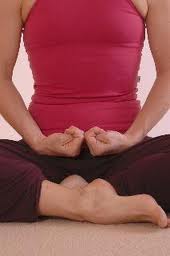
CINMAYA MUDRA


cinmayamudra is sit comfortable sitting position, with the needle upright. Place . Fingers and thumbs together and extend the other 3 fingers out. Turn the palms.Upwards, and rest the backs of the hands onto the knees or thighs. In yoga cinmaya mudras Close the eyes and breathe naturally, through the nose. Try to maintain consciousness of each. Breath moving into and out of the nostrils for two or three minutes.
   Yoga mudras, or hand gestures, are specific postures for the hands performed during yoga or meditation. Mudras can aide the body in healing by channeling energy to specific areas or parts of the body, and energizing the mind or body connection. The benefits of yoga mudras can be seen when used on a regular basis. It is often helpful to perform mudras during pranayama. Pranayama, meaning “expansion of life force, refers to yogic breathing. Pranayama might be described as deliberate and deep breathing with the goal of using the breath to bring new energy into the body to stimulate physical and mental well-being. When used in conjunction, pranayama and mudra can have powerful effects on the body and mind.
Sit or lie in a comfortable position when practicing pranayama. Mudras should be held in relaxed positions, without strain or discomfort. The Vishnu Mudra can be used to alternate breaths through each nostril. Use the right hand o perform Vishnu. Place the tips of the forefinger and middle finger at the base of the thumb while leaving the last two fingers upright. Use the thumb to close one nostril, breath deeply filling up the belly and chest, then release the breath and use the ring finger to close the opposite nostril. Continue alternating breaths.
Practice Chin Mudra to ground the mind. Place hands on the knees or thighs, palms down. Place the tip of the forefinger and the tip of the thumb together, letting the other three fingers relax. The Jnana Mudra is very similar to Chin. The fingers are placed in the same position, but the hands should rest facing up, as opposed to down. Gnana can uplift the mind, giving a sense of spaciousness.


Thursday, 7 February 2013

SALABHASANA


Salabhasana comes from Sanskrit word Salabha + asana where Salabha means locust or grasshopper. This is why; this wonderful yoga posture is also called Locust Pose. Salabhasana (Locust pose) strengthen muscle of lower back and upper leg which are the most affected part of people seating on chair for long time.

How to perform Salabhasana:-

Before you start with salabhasana, rest on stomach by making your hand as a pillow under your head.
Bring your arms under your body and try to keep your elbows as closer as possible. Refer below image for more details. Once you are into this position, inhale and lift your right leg as high as you can. Stay in this position for upto 5-30 seconds as you can continue with breathe. Now perform the same posture with your left leg.
In full locust, you need to start with the same posture as you did in half locust but the basic difference is; you have to lift both the legs.

Benefits:-

Strengthening the muscle of lower back
Strengthen the shoulder and arm
Strengthening the muscle of upper leg
Stimulates the stomach and intestines helping to relieve gastrointestinal gas and improve digestion.
Strengthens the bladder, and stretches the spine.
Apart from these, there are various mental and physical benefits of practicing Salabhasana every day.This Asana gives a posterior curvature to the spine. It bends the spine backwards. In bending the spine it serves as a counter-pose to Paschimottanasana, Halasana and Sarvangasana which bend the spine forwards (anteriorly). Like Mayurasana, it increases the intra-abdominal pressure. It supplements the Bhujangasana. Bhujangasana develops the upper half of the body, while Salabhasana develops the lower half of the body and the lower extremities also. It tones up the muscles of the abdomen, thighs and legs. It brings down the accumulated faecal matter of the stomach to ascending colon, from ascending colon to transverse colon of large intestines, from transverse colon to descending colon and from there to the rectum. Read any book on elementary physiology. It will help you a lot.

This Asana gives a good exercise for the abdomen. It relieves constipation. It tones the abdominal viscera (organs) viz., liver, pancreas, kidneys, etc. It removes several diseases of the stomach and bowels. It cures sluggishness of liver and hunchback. the lumbo-sacral bones are toned up. Lumbago is removed. All forms of myalgia of the lumbar region (hips) are removed. The digestive fire is increased. Dyspepsia is removed. You will have very good appetite.